Project / Publication
Fan Tiao 翻跳 (2023-)
Know not what it means, and I say YEAH (2024)
The Books of LOVE DIVE 愛潛水書 (2023)
2000sinned 孩子的房間;2000 (2022)
Fan Tiao 翻跳
(2024-2026)
Note:
In 2006–2007, Ho was trained as the leader of her school’s broadcast gymnastics team in Guangdong, China. After immigrating to Hong Kong in 2008, Ho has been relentlessly practising different forms and genres of dancing. Unfortunately, she can never go back to the context of how socialist collectives placed a strong emphasis on body exercise routines and the practice of imitation during her childhood. This is the unscheduled field research note for Fan Tiao (2024-).
Since 2024, Ho has been developing an ongoing research project, Fan Tiao (翻跳), with the social dance community North District Dance Association (北區舞蹈聯會) in Hong Kong's North District as her field site.
The group was self-organized around 1997 and was particularly active between 2010 and 2019, with activities taking place across public housing estates and Leisure and Cultural Services Department sports halls in the northeastern New Territories, including Fanling South, Luen Wo Market, Sheung Shui, and Tai Po.
The research focuses on how residents of the North District and immigrants from mainland China cultivate bodily friendship through dance, and on the imagined differences between socializing dance (社交舞) and comradely dance (交谊舞).
Fan Tiao seeks to understand how, amid continuous migration, people reinvent a sense of place in dance spaces and seek the resources that sustain their lives.
* * *
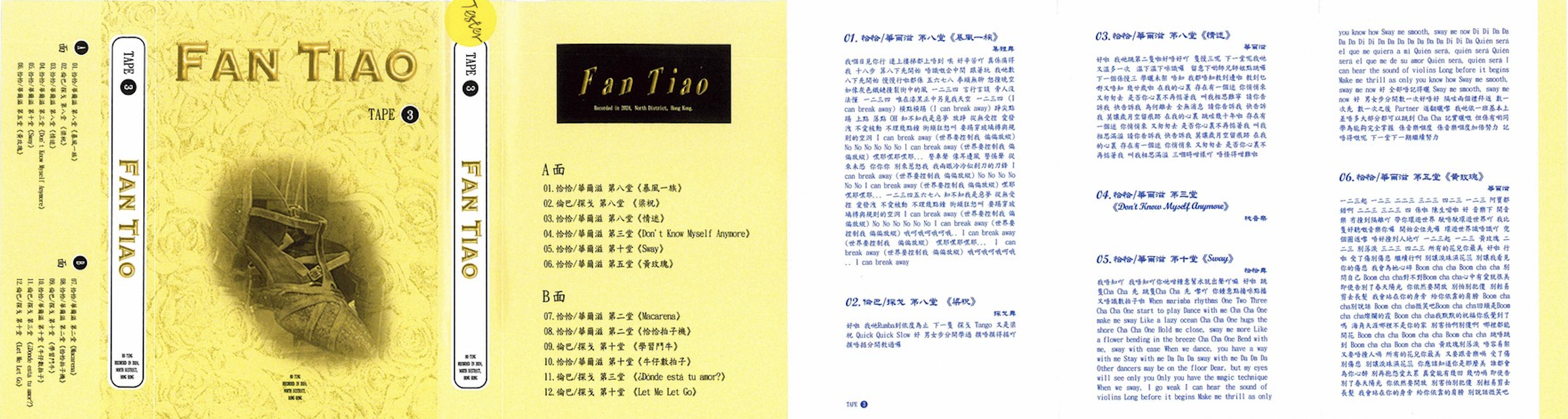
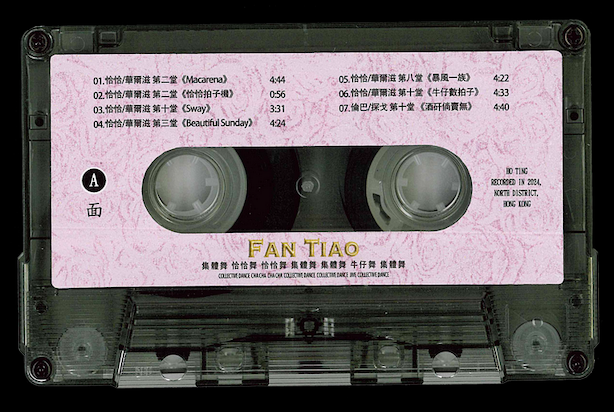
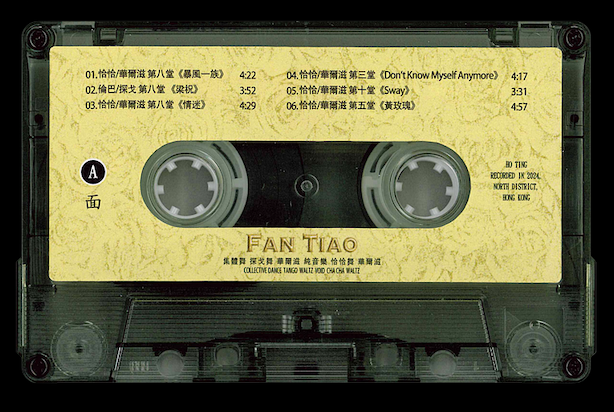
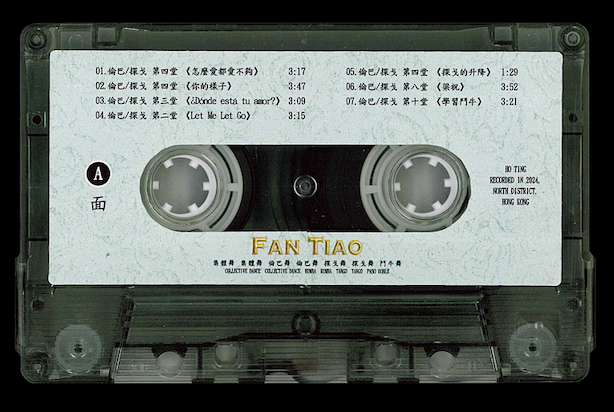
Side A of the cassettes. They are Tape 1 (Cha-cha and congregational dance), Tape 2 (Rumba and Tango), and Tape 3 (Waltz).
Fan Tiao No. 2 (2024-2025)
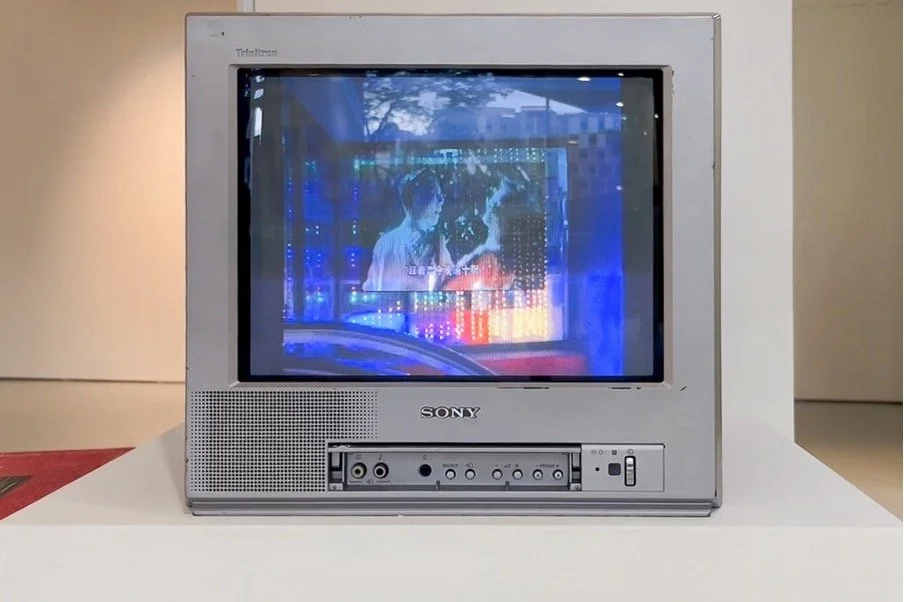
Customized Cassette Tapes (Set of 3), Karaoke machine with screen
Fan Tiao No. 2 comprises three sets of cassette tapes labelled Tape 1, Tape 2, and Tape 3. Each tape is arranged according to different social dance moves, the changing seasons of teaching, and the spontaneous conversations that unfolded between teacher and students during different course periods. The three tapes are identified by distinct colours, corresponding respectively to Cha-cha and congregational dance, Rumba and Tango, and Waltz.
Visitors are invited to use the music player to listen to the recordings. Please follow the numerical order indicated on the yellow label and adjust the volume using the knob located on the left side of the player.
Each cassette is available for rental at HK$270. All tapes are available for open-ended rental. To borrow a tape, please contact the artist and complete the rental agreement form.
Designed by Ho Ting (2025).
Fan Tiao No. 3 (2025)
recorded on 22/02/2025, LASALLE College of the Arts, Singapore.


Inner page of the cassette case, Tape 3 (Waltz).
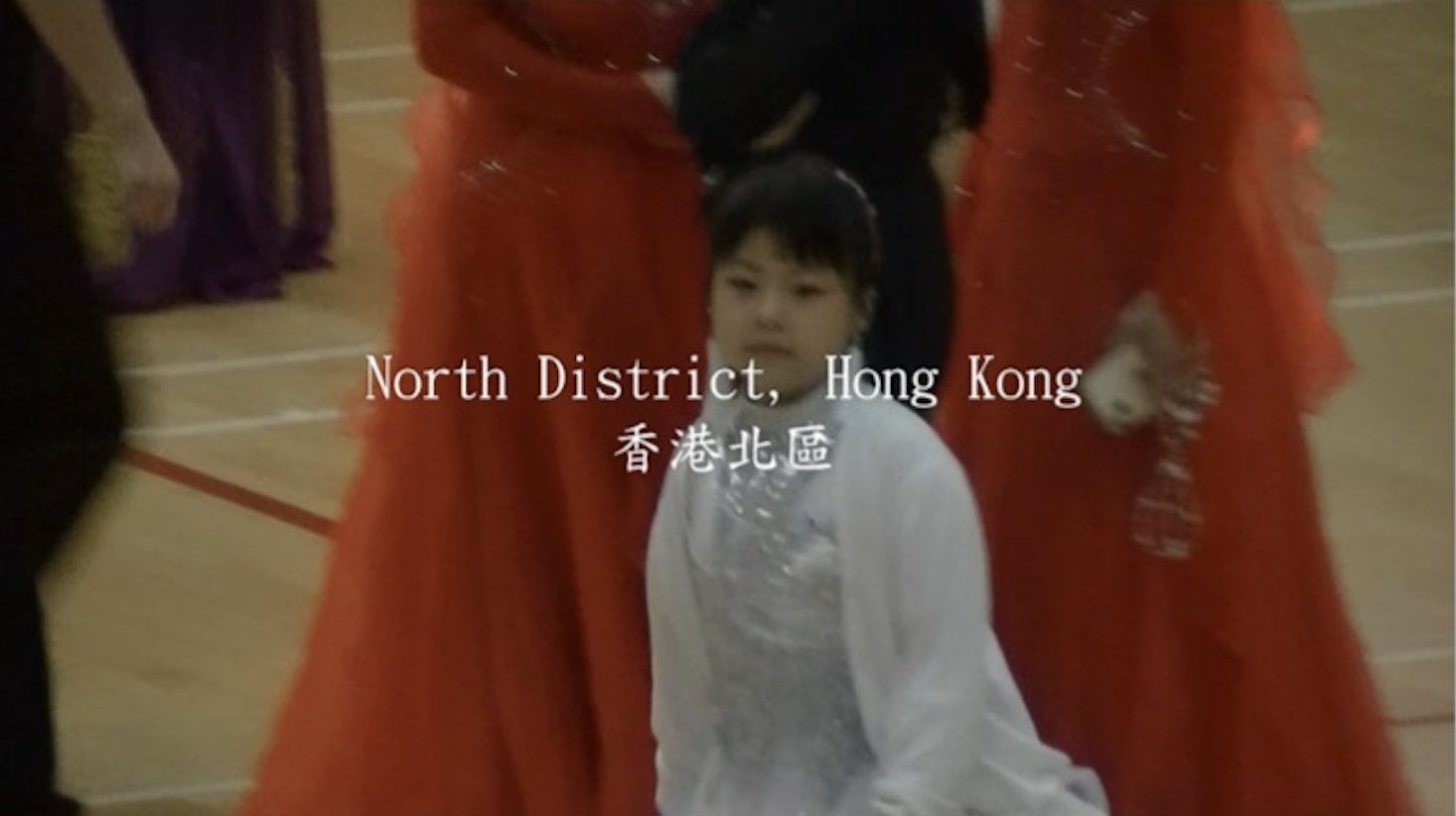
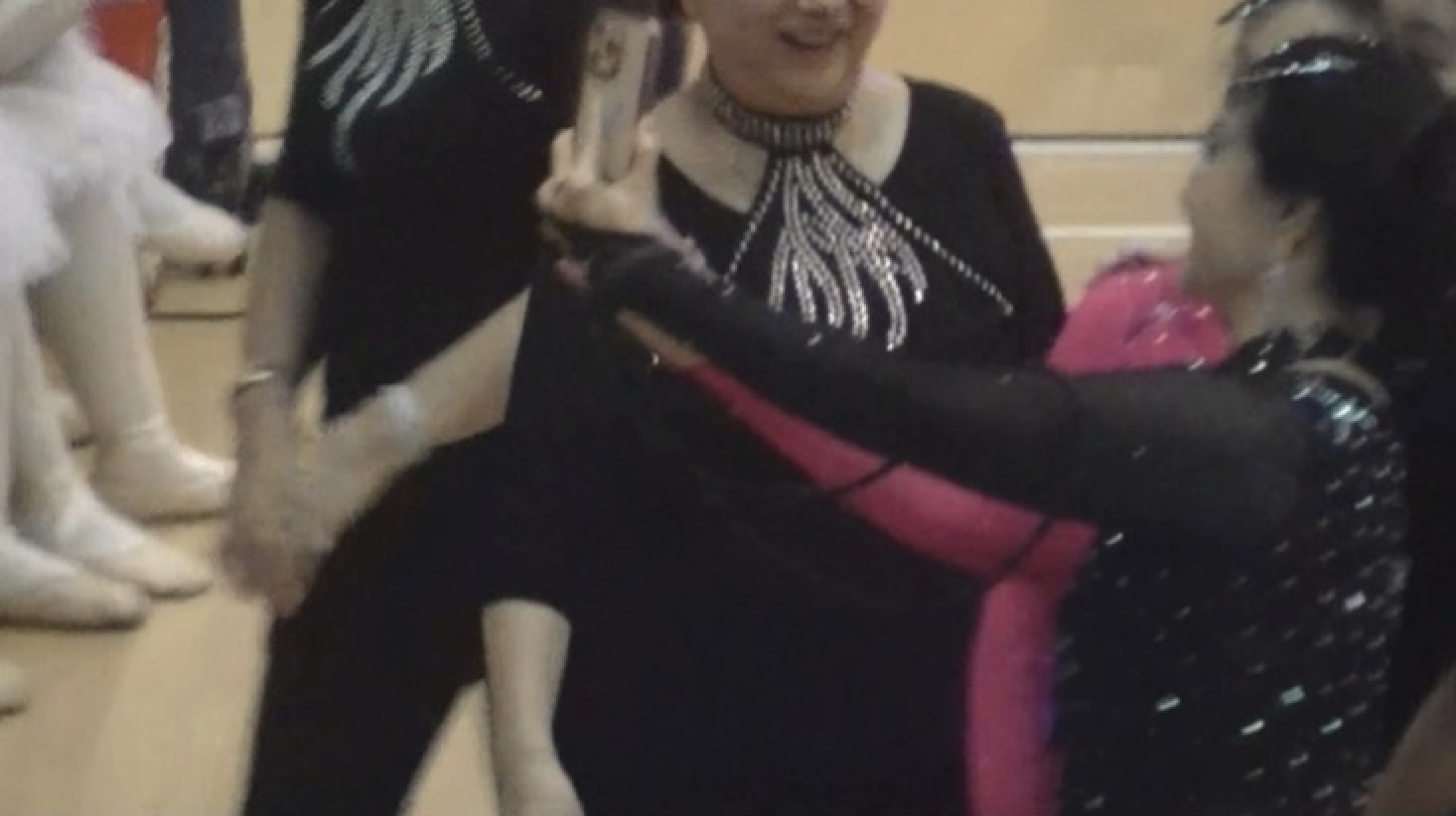
Documentary filmed in 2024, North District, Hong Kong.

Front view of the film, at LASALLE College of the Arts, Singapore.
This photo album is a collection of “dance” records from Singapore, spanning from 1920 to 1985.
It was created by filtering the photographic database of the National Archives of Singapore using the keyword “dance,” reviewing 18,046 items, and selecting 214 photographs.


Inner pages of the photo album, the originals are from the National Archives of Singapore (NAS).
Fan Tiao No. 3 (2025) is the first piece of work executed based on the concept of Fan Tiao during the Spring Residency Programme in LASALLE, Singapore. It comprises a collection of digitized photographs, magazines, newspapers, commercial advertisements, and footage recorded at various locations in Singapore, including Sim Lim Tower, People’s Park Centre, Waterloo Centre, and Singapore Management University. Additional sources include archival materials from the National Archives of Singapore (NAS), the National Library of Singapore, and excerpts from the Hong Kong film The Mad Phoenix (南海十三郎) (1997) directed by Clifton Ko.
Slow Three Memory 1948 (Waltz Footwork Study) (2026)
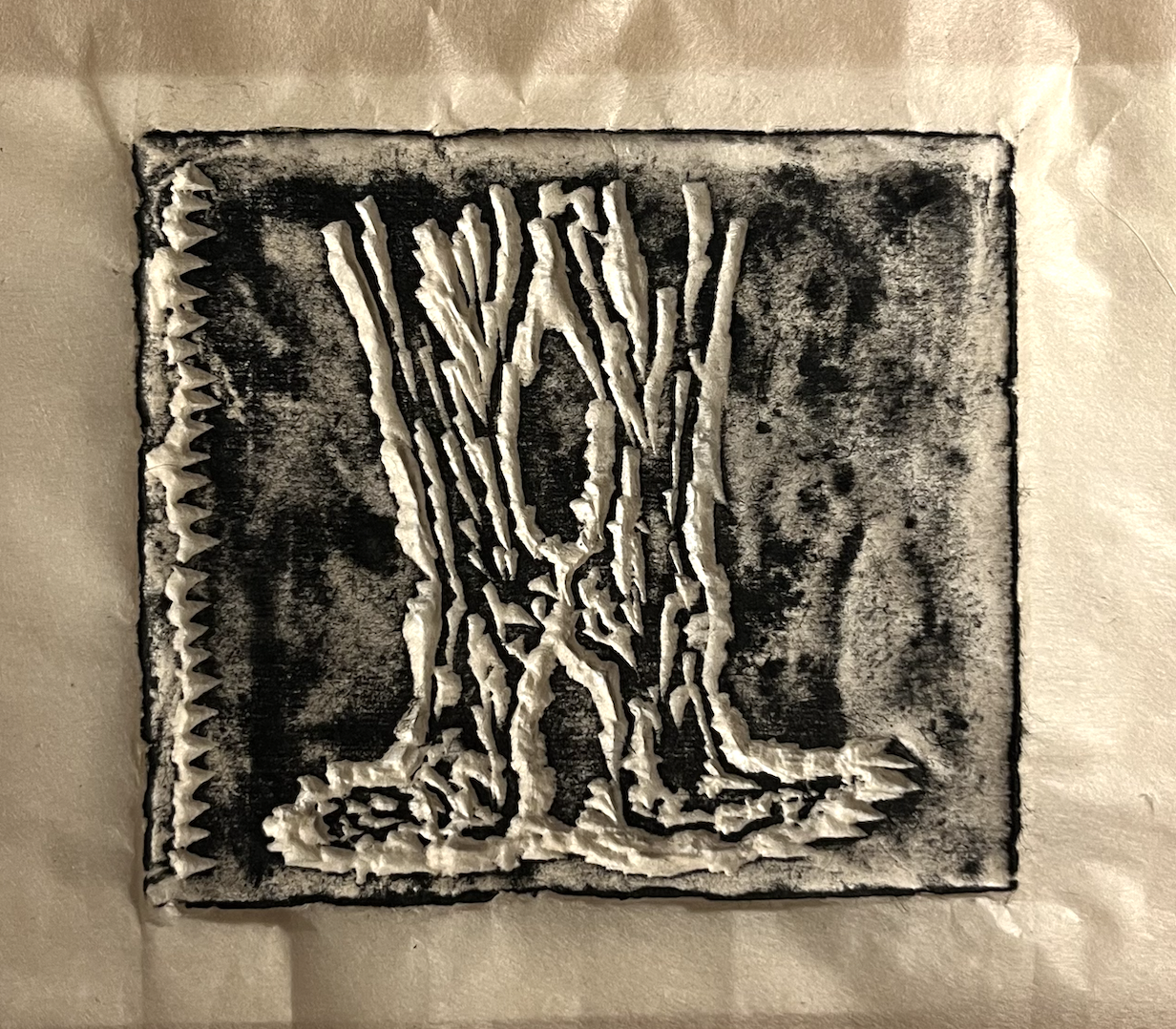
Plaster relief prints (a pair)
Slow Three Memory 1948 constitutes Ho’s second historical inquiry derived from official archival imagery, following her 2025 Singapore residency. In 1947, the Nationalist government imposed a nationwide ban on commercial dance halls, a measure that precipitated escalating tensions between state authorities and members of the dance profession. These tensions culminated in the mass protest movement of January 1948, when thousands of dance hostesses and dance workers organized collective actions and carried out acts of destructive resistance at multiple government institutions in Shanghai. Officially and popularly referred to as the Dance Tide (wuchao), the event may be understood as the Dancers’ Uprising.
Drawing upon the accumulated bodily feedback generated through learning the waltz, Ho tempers this experience into lithographic imagery. Through her own physical training during the field, she seeks to respond to the collective images documented in archival records of the 1948 Shanghai Dance Tide.